Soldering Processes

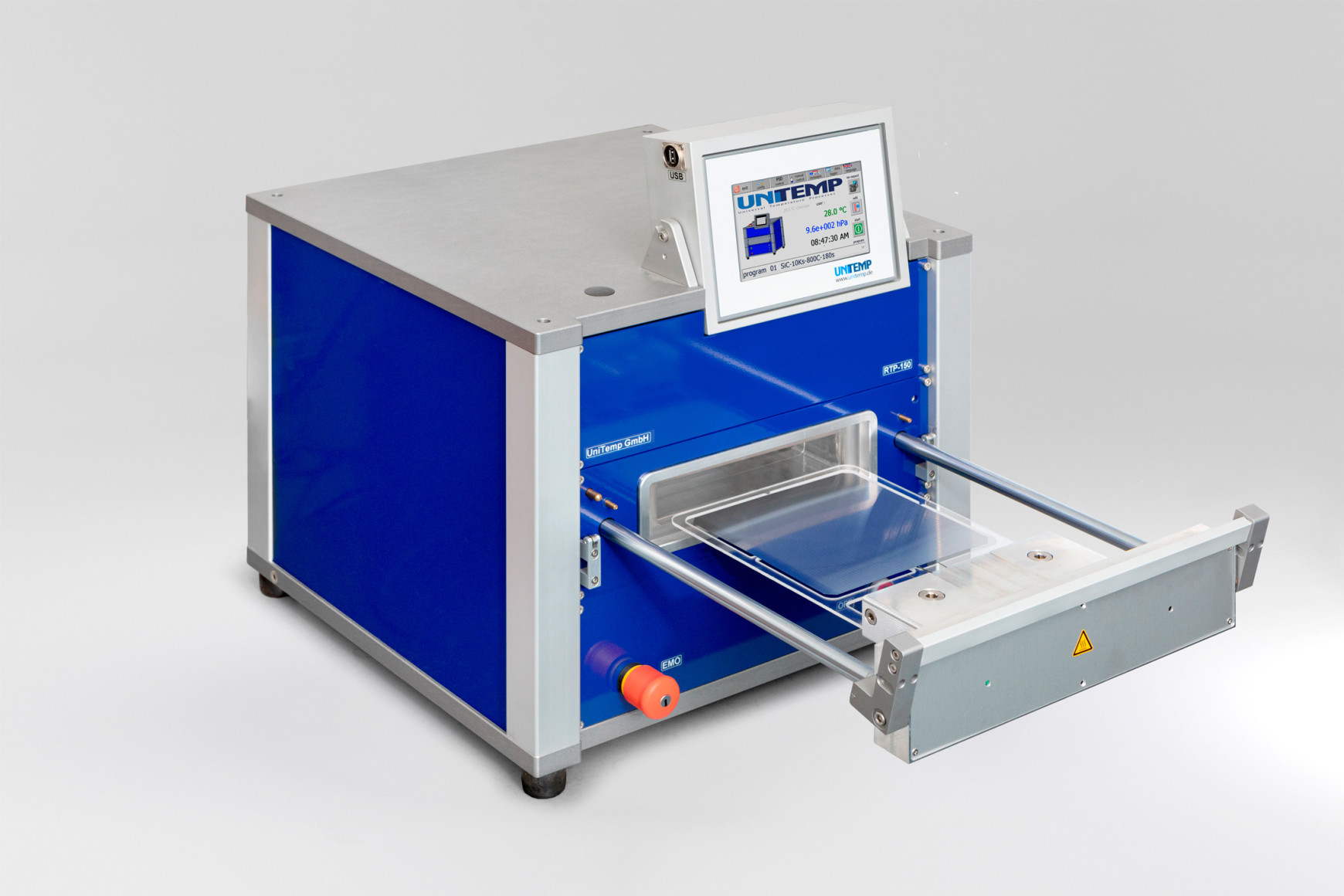
Whether it’s reflow soldering, vacuum soldering, or flux-free processes – our solutions enable precise control of all relevant process parameters. For optimal wetting, minimal defects, and reliable solder joints. Tailored to your materials, components, and quality requirements.

Precisely controllable temperature profiles enable optimal melting of various solder pastes. This reduces soldering defects, minimizes scrap, and ensures reproducible results—even with varying materials and components.

Vacuum soldering equipment

Soldering with formic acid enables a reliable, flux-free joint between oxide-sensitive components and solders – such as those based on copper, silver, or SAC. During the soldering process, the formic acid reduces existing oxide layers at the solder joints, thereby promoting improved wetting with the solder – without any flux-related residues.

The process is particularly well-suited for demanding applications that require high purity and reliable solder joints, such as in high-frequency and medical technology. When combined with a nitrogen or inert gas atmosphere, re-oxidation of the surfaces during the process is also minimized.

Vacuum soldering equipment

Hydrogen acts as a powerful reducing gas and reduces residual oxygen during the brazing process. This significantly reduces porosity (gas or void inclusions in the brazed joint). To simplify handling (due to the explosion hazard posed by pure hydrogen), the process is typically carried out using a low mixing ratio with nitrogen (e.g., 95% N₂ / 5% H₂). Users benefit from improved solder joint quality, higher mechanical strength, and more reliable solder joints.

Vacuum soldering equipment

Targeted evacuation after the solder has melted removes air pockets and gases from the solder joint. This reduces the porosity rate – depending on the process parameters – to less than 2%. This improves heat transfer and the reliability of the solder joints, particularly in demanding applications such as IGBT, MOSFET, and LED modules. UniTemp offers systems with multiple vacuum zones, combined heating/vacuum zones, or as single-vacuum chambers.

Vacuum soldering equipment

Careful selection of gases optimizes process conditions, improves soldering quality, and allows for precise adaptation to material-specific requirements.

Nitrogen (N₂)
Prevents oxidation, improves wetting, and reduces slag formation.

Hydrogen (H₂)
Reduces oxide layers and promotes the formation of clean, reliable solder joints.

Forming gas (N₂/H₂)
Combines the protective effect of nitrogen with the reducing effect of hydrogen—while being easier to handle than pure hydrogen.

Argon (Ar)
Provides a particularly inert atmosphere for highly specialized applications, such as in sensor technology.

Profiling and Temperature Measurement:
Precise thermal profiles enable monitoring and optimization of the soldering process.

Closed-Loop Control:
Automatic adjustment of gas flow and temperature for stable, reproducible results.

Residue-Free Process Control:
Minimizes contamination and reduces cleaning requirements in demanding applications.

Flux management:
Recovery or reduction of fluxes—for example, through the use of formic acid—lowers residue levels and process costs.

Application areas & benefits

High-Reliability Electronics:
Reliable solder joints for demanding operating conditions and long service life.

Power Modules (Power Devices):
Minimization of voids and improved heat transfer in IGBT and MOSFET modules.

LED Manufacturing:
Uniform solder joints for high light quality and long-term reliability.

Medical Electronics:
Clean, reproducible soldering processes for sensitive electronic components.

Automotive:
Reliable joints for sensors, control units, and safety-critical electronics.

Aerospace:
The highest standards for process reliability, quality, and long-term stability.

RF and high-frequency circuits:
Low-residue solder joints to ensure defined electrical properties.
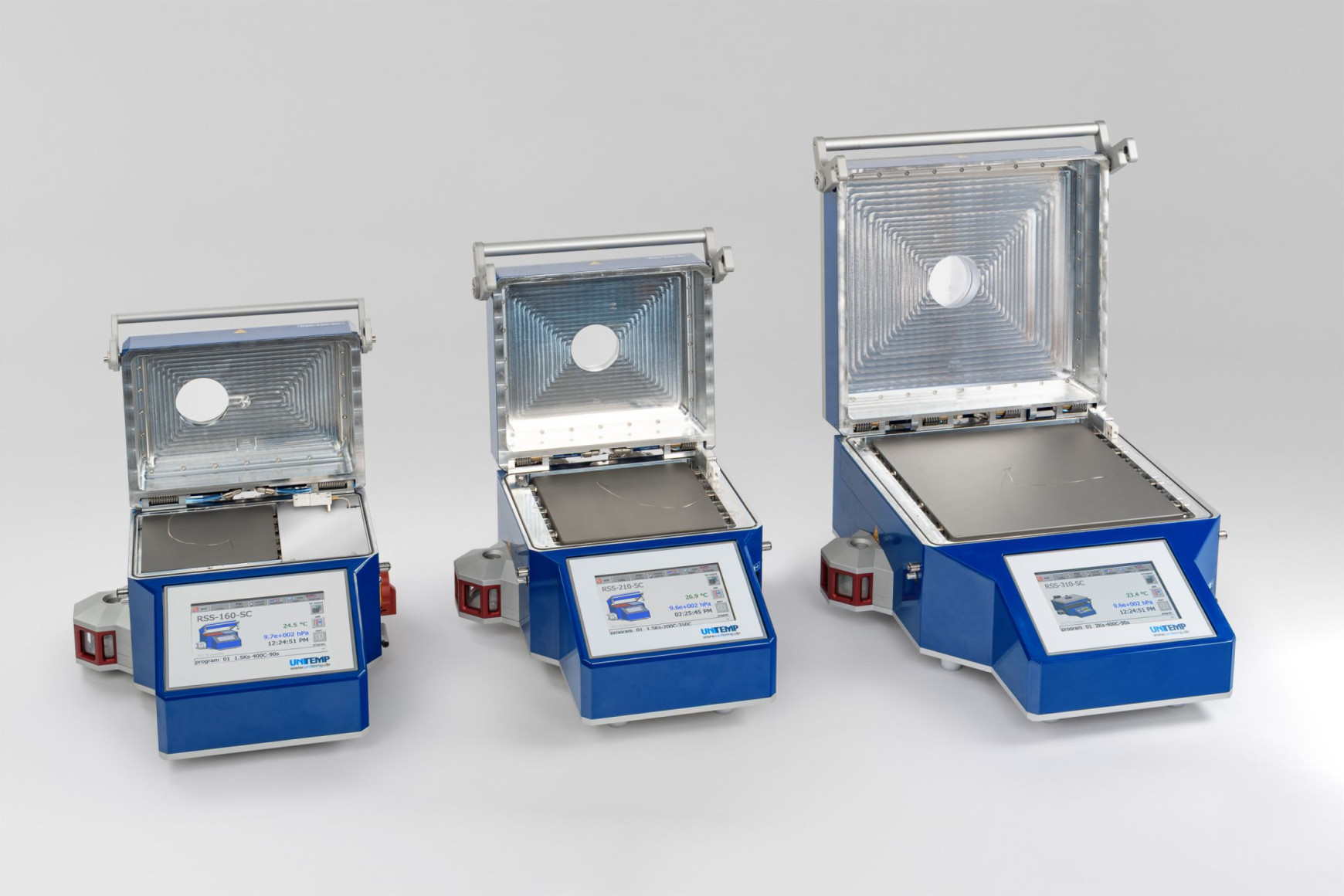
VSS Series (Vacuum soldering system)

Even in the contaminated area

More

RSO Series (Reflow soldering oven)

With a vacuum and high vacuum

More

How can we help you?

Are you looking for a solution for your thermal process equipment?

Contact us.